Less logging. More useful context.
Track your food from one photo.
Let SAGEViBE turn a quick photo into nutrition context you can actually use.
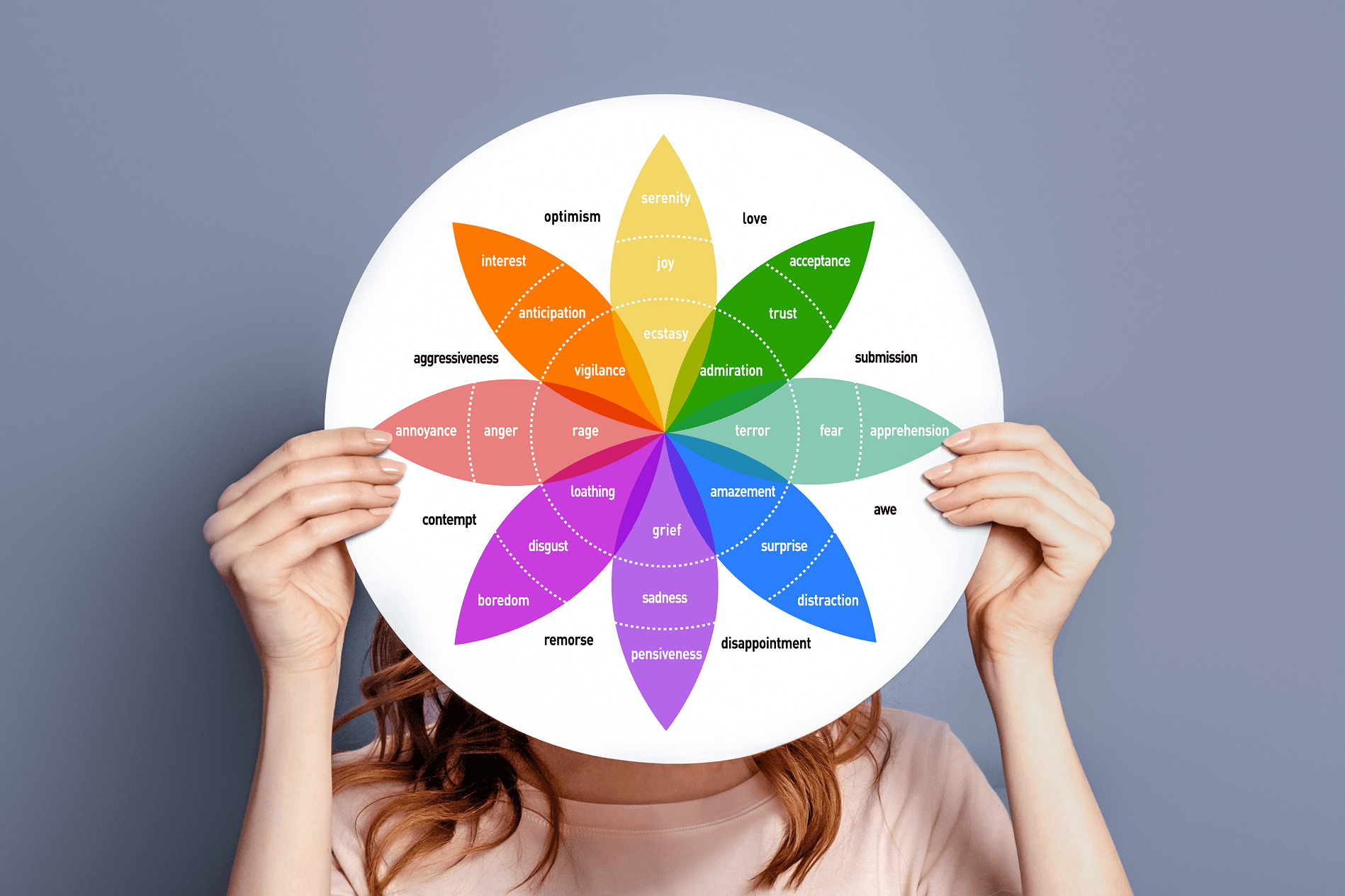
Related: How to Name Your Emotions
Does mood tracking help or hurt?
Both are possible — and the deciding factor is design, not the act of tracking. The same behavior (noticing and noting how you feel) can build self-awareness or feed anxiety depending on what the tool does with it. A tool that helps you name a feeling and then closes gently supports you. A tool that leaves you staring at a wall of bad days, or punishes a missed entry, works against you. So the honest answer to "is mood tracking good for me?" is: it depends on the tracker.
What's the real risk — brooding vs reflection?
The single biggest risk is rumination: passive brooding that circles a negative thought without moving toward anything. Research draws a clear line here — brooding amplifies negative affect and impairs problem-solving, while adaptive, action-oriented reflection does not (Nolen-Hoeksema, Wisco & Lyubomirsky, 2008). Qualitative work on self-tracking echoes it: engaging with your own tracked data can trigger guilt, pressure, and rumination when the design invites dwelling rather than closure.
The practical rule that follows: name the feeling, be witnessed, and stop there on a hard day. Reflection is a doorway, not a place to camp.
Can streaks and rewards make it worse?
Yes — when they run on fear of loss. Streaks work by loss aversion, and pushed too hard they turn a missed day into a sense of failure, which breeds guilt and compulsion rather than motivation. There's a deeper mechanism too: expected external rewards can quietly undermine the internal motivation they're meant to boost (Deci, Koestner & Ryan, 1999). A good tracker rewards showing up, never punishes a gap, and never resets your effort to zero with fanfare.
What does safe mood tracking look like?
Safe tracking closes every entry, offers a guilt-free exit, and never shows you your worst days on your worst day. Concretely:
- Every check-in closes. Naming a hard feeling and being left alone with it is the road into rumination; closure (even just being heard) prevents it.
- A pause is always allowed. "Take a break from check-ins for a few days?" is a supported choice, not a failure.
- No wall of bad days. A low day is not the moment to display a history of low days.
- Effort over chains. Encouragement for participation, not guilt over a broken streak.
- Correlation, not causation. A good tracker says "on low-water days you more often note tiredness," not "dehydration is making you sad" — it shows patterns, it doesn't diagnose.
How SAGEVibe is designed to avoid the backfire
SAGEVibe treats the safeguards above as the product, not the polish. The check-in is short and always closes; on a low state the response is to witness, not to push you to explain; pausing is guilt-free; there are no all-or-nothing streaks and no comparison to other users; and any pattern it surfaces is framed as a personal correlation you can notice, never a cause it claims to know.
(SAGEVibe is a wellness companion, not a medical device. Nothing here treats, prevents, or diagnoses depression, anxiety, or any condition — if a feeling is heavy or persistent, that's a conversation for a professional.)
Sources
- Nolen-Hoeksema S, Wisco BE, Lyubomirsky S. Rethinking Rumination. Perspectives on Psychological Science. 2008;3(5):400–424.
- Deci EL, Koestner R, Ryan RM. A meta-analytic review of experiments examining the effects of extrinsic rewards on intrinsic motivation. Psychological Bulletin. 1999;125(6):627–668.
- Ntoumanis N, et al. A meta-analysis of self-determination theory-informed interventions. Health Psychology Review. 2021;15(2):214–244.
Continue with: Daily mood check-in
Common questions
Frequently asked questions
Is mood tracking good or bad for you?
It can be either. Brief, structured tracking that closes each entry supports self-awareness; tracking that invites brooding or punishes missed days can increase guilt and low mood. The design decides.
Can tracking my mood make me more anxious?
It can if it turns into rumination — replaying negative thoughts without moving on — or if it uses guilt-based streaks. Tools that close each check-in and reward showing up (not perfection) avoid this.
Are streaks bad for mood apps?
Streaks built on fear of losing them can create guilt and compulsion. Framed instead as a record of what you've done — with a soft "welcome back" after a gap — they encourage without punishing.
When should I stop using a mood tracker?
If checking in consistently leaves you feeling worse rather than more aware, pause it — without guilt — and, for heavy or persistent feelings, talk to a professional. A tracker is a companion, not care.
Less logging. More useful context.
Track your food from one photo.
Let SAGEViBE turn a quick photo into nutrition context you can actually use.