Less logging. More useful context.
Track your food from one photo.
Let SAGEViBE turn a quick photo into nutrition context you can actually use.
Related: Daily mood check-in
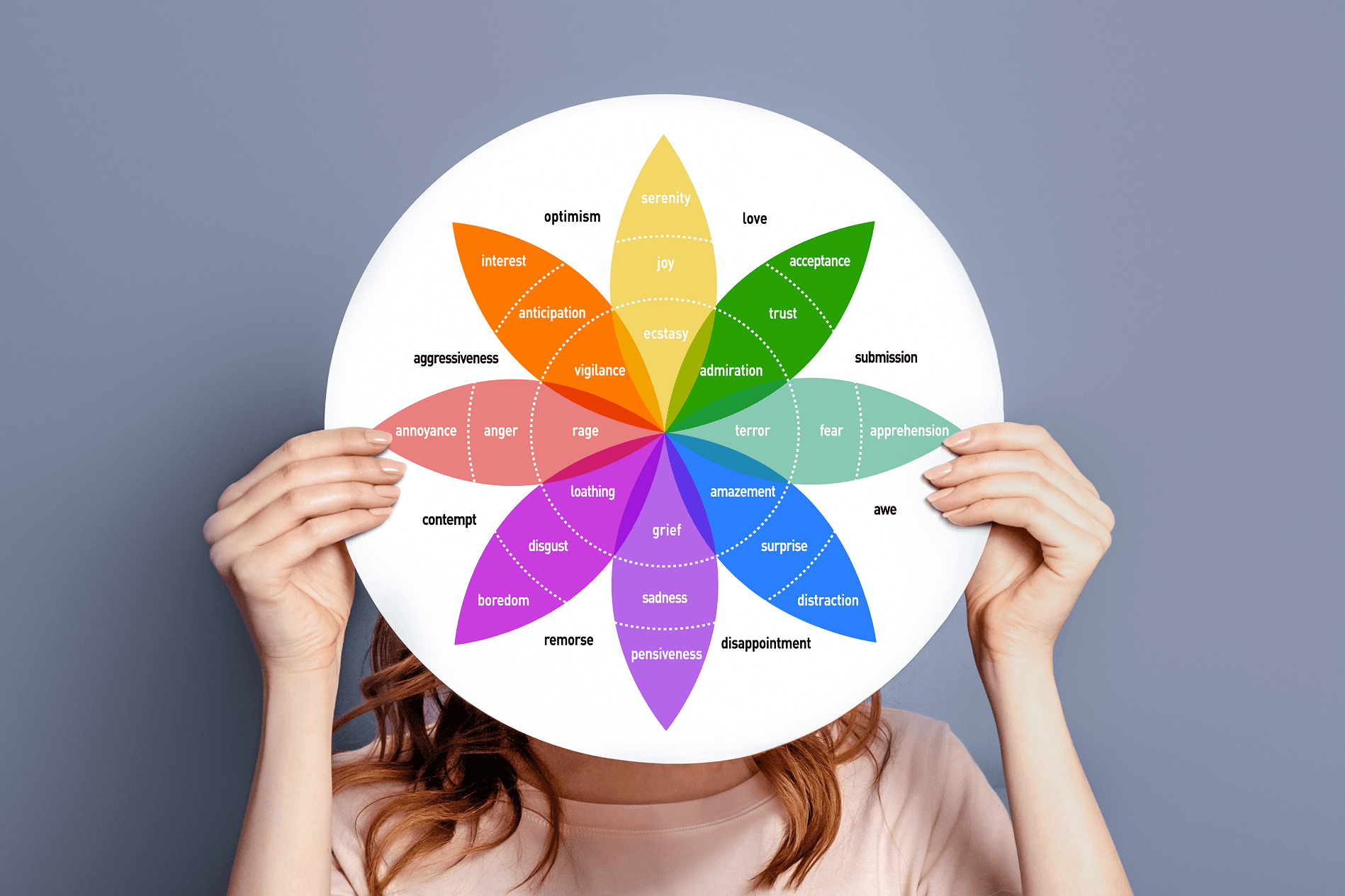
How do you name what you're feeling?
Start with your body and two quick judgments, then narrow to a specific word. It's a three-step move:
- Energy — is your body high-energy (buzzing, tense, restless) or low-energy (heavy, slow, tired)?
- Pleasantness — does the feeling sit pleasant or unpleasant?
- Narrow down — those two answers land you in one of four zones; now pick the exact word. Low-energy + unpleasant isn't just "bad" — it might be disappointed, lonely, flat, or defeated, and those call for different things.
This two-axis method comes from the circumplex model of affect (Russell, 1980) and is the same logic behind the Mood Meter. It works because it doesn't demand the perfect word up front — it gives you a direction first, then a name.
Why aren't 'good' and 'bad' enough?
Because vague labels give you vague options. Researchers call the skill of making fine distinctions between feelings emotional granularity (Barrett). Someone who can separate "anxious" from "overwhelmed" from "resentful" can respond to each differently; someone stuck on "I feel bad" has nowhere specific to go.
A richer vocabulary isn't about sounding sophisticated — it's practical. "I'm anxious about the call at 3" points to a clear next step. "I feel bad" doesn't. Naming the feeling precisely is often the first move that makes it workable.
Why does naming it in the moment beat remembering later?
Because memory rewrites feelings. When you try to recall on Sunday how you felt on Tuesday, you don't retrieve the real moment — you reconstruct it, colored by how you feel now. In-the-moment capture (what researchers call ecological momentary assessment) minimizes that recall bias and reflects your actual state (Shiffman, Stone & Hufford, 2008).
That's the case for a short daily check-in over a monthly "how was your month" survey: the small, frequent note is simply better data about your own life — and a better habit.
Does naming feelings ever make them worse?
It can, if naming turns into brooding — but structured, brief reflection does not. The research draws a sharp line: passive brooding, replaying the same negative thought on a loop, tends to deepen a low mood, while action-oriented reflection — name it, notice it, move — does not (Nolen-Hoeksema, Wisco & Lyubomirsky, 2008).
The practical rule: name the feeling, let yourself be seen in it, and stop there on a hard day. You don't owe yourself an interrogation. Naming is a doorway, not a place to camp. (This is self-awareness, not therapy — SAGEVibe is a wellness companion, not a medical device, and none of this treats or prevents a mental-health condition.)
How SAGEVibe helps you name it
SAGEVibe makes naming a feeling a 10-second daily habit inside the chat. The companion asks how you're feeling and what your energy is like, you answer in your own words or by picking where you are, and it reflects that back as a simple indicator you can watch over time.
- Two-question entry, richer words underneath — fast to answer on a heavy day, with room to get specific when you want to.
- In the moment, once a day — so it captures the real feeling, not a reconstructed one.
- Always closed with support — on a low day the response is to witness, not to push you to explain yourself.
- Yours over time — your entries build a private picture of your own patterns, so the naming compounds into self-knowledge.
Sources
- Russell JA. A Circumplex Model of Affect. Journal of Personality and Social Psychology. 1980;39(6):1161–1178.
- Barrett LF. How Emotions Are Made: The Secret Life of the Brain. Houghton Mifflin Harcourt, 2017 — emotional granularity.
- Shiffman S, Stone AA, Hufford MR. Ecological Momentary Assessment. Annual Review of Clinical Psychology. 2008;4:1–32.
- Nolen-Hoeksema S, Wisco BE, Lyubomirsky S. Rethinking Rumination. Perspectives on Psychological Science. 2008;3(5):400–424.
Continue with: Can Mood Tracking Backfire
Common questions
Frequently asked questions
What's the easiest way to name an emotion?
Ask two questions — how much energy you feel and whether it's pleasant or unpleasant — to land in a general zone, then pick a specific word within it. Direction first, exact name second.
What is emotional granularity?
Emotional granularity is the ability to tell similar feelings apart in fine detail — for example distinguishing "anxious," "overwhelmed," and "nervous." Finer distinctions are linked to handling emotions more skillfully.
Is it better to track feelings daily or weekly?
Daily, in the moment, gives more accurate data because it avoids recall bias — remembering a past feeling is a reconstruction, not a replay.
Can writing down my feelings make me feel worse?
Only if it becomes brooding — replaying the same thought without moving on. Brief, specific naming that then closes does not; it's the endless loop, not the naming, that harms.
Less logging. More useful context.
Track your food from one photo.
Let SAGEViBE turn a quick photo into nutrition context you can actually use.